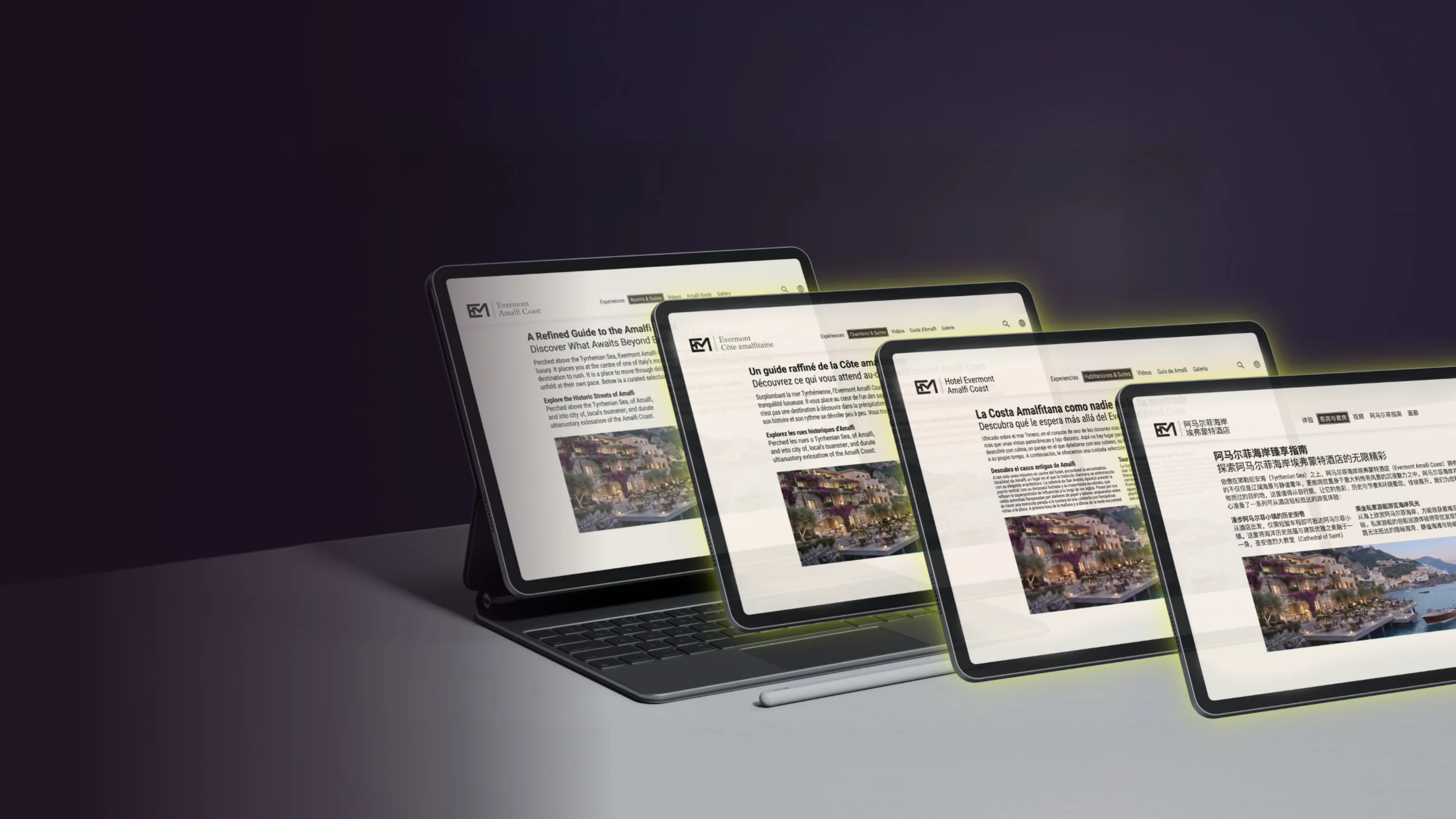
Translation gets the words right. Localisation gets the meaning right.
The gap translation leaves open
Cultural references that don’t land, conventions that feel foreign, copy that reads like it came from somewhere else. A direct translation produces linguistically accurate content, but not necessarily content that feels like it was written for the audience receiving it.
What localisation does instead
Localisation starts with the source text and goes further. It embeds the cultural nuances, language trends, and local conventions of your target market (currencies, date formats, cultural references, tone) while flagging any decisions that need client input rather than making them unilaterally.
What localisation is right for

Standard Digital & Marketing Content
Product pages, email campaigns, social copy. Content where the core message travels, and what’s needed is a culturally considered adaptation that feels written for the market, not converted for it.

Ad Copy, Scripts & Subtitles
Short-form content where every word carries weight. We adapt for the cultural expectations of the audience and the conventions of the format without losing what made the original work.
When the Brief Doesn’t Require Full Transcreation
Where content doesn’t rely on wordplay, humour, or emotional reinvention, localisation delivers cultural authenticity without the cost and timeline of a full creative rewrite. For content that needs more, see our transcreation service.
Not sure whether localisation is the right approach for your content?
Tell us what you’re working with and we’ll help you decide: localisation, transcreation, or something in between.
Talk to our teamFAQs
Every beautiful relationship begins with a simple hello. So let’s chat. It might be the start of something.


What is the difference between localisation and translation?
Translation converts content from one language to another with a focus on linguistic accuracy. Content localisation goes further, it adapts the content to the cultural norms, language trends, and conventions of the target market, so it reads as if it were written there, not converted from somewhere else.
How is localisation different from transcreation?
Localisation remains anchored to the source text, adapting it for cultural and contextual fit. Transcreation starts from a brief and gives linguists the freedom to rewrite content entirely, prioritising emotional and cultural resonance over linguistic fidelity. Localisation is the right choice when the message travels; transcreation is for when it needs to be reinvented. Learn more about transcreation.
What kinds of decisions does localisation involve?
Beyond language, localisation considers currencies, date and time formats, cultural references, local conventions, and how the target audience expects to receive information. Where those choices aren’t straightforward, we flag them back to the client rather than deciding unilaterally.
When should I use localisation rather than transcreation?
Localisation suits content where the core message is sound and the goal is cultural authenticity such as product pages, email copy, social content, ad scripts. Transcreation is reserved for assets where the impact depends on wordplay, humour, or emotional reinvention that a direct adaptation can’t preserve.
What content types does your localisation service cover?
We localise digital marketing copy, website content, ad scripts, supers and subtitles, email campaigns, paid social content, and more across markets, formats, and languages.
Get Started
Every beautiful relationship begins with a simple hello.
So let’s chat. It might be the start of something.
Contact us