
Creative Content Automation is a production methodology that optimises a blend of cloud-based technologies and advanced software capabilities to generate a high volume of visual assets across all types of media. The recent evolutions in this field have raised important questions around the future landscape of international omnichannel campaigns. Consequently, global marketers and advertisers will be seeking to improve efficiency and set new objectives for their content strategies.
We consulted with our team expert working at the heart of this subject – Tatiana Myronenko, Head of Producers – asking her to share her insights on the automation of creative content and how this technology can be optimised by brands and agencies to boost global campaigns efficiency. Here she highlights pros and cons, and provides tips on whether this is the right methodology for specific content.
Automation Pros:
1. Fast Project Turnaround – content automation offers a tangible solution for global projects and generating high volumes of assets. This is an incredibly useful tool for time-sensitive projects and creative work otherwise categorised as less technical yet time-consuming (text replacement, subtitling, etc.).
2. Smooth Project Management – automation platforms now include useful project management tools which allow agencies to track project history (brand materials, approvals etc.) and unify content in one location. Automated statistic generation features for reporting also help to save time and improve transparency.
3. Time Efficiency – advanced capabilities mean tedious technical tasks, for instance mass cropping and asset resizing, can effectively be managed by automation tools. This frees up production time so that VFX artists can concentrate on more creative work such as detailed visual effects, image fine-tuning, colour correction, etc.
4. Creative Flexibility – powerful software is able to carry out corrective tasks and asset updates, allowing creative flexibility and higher levels of autonomy. For example, smaller teams could achieve greater efficiencies by using an automation tool to relaunch campaigns as new assets with varying subtitles/supers. This can be done by uploading the new text into the platform and clicking ‘launch automation’.
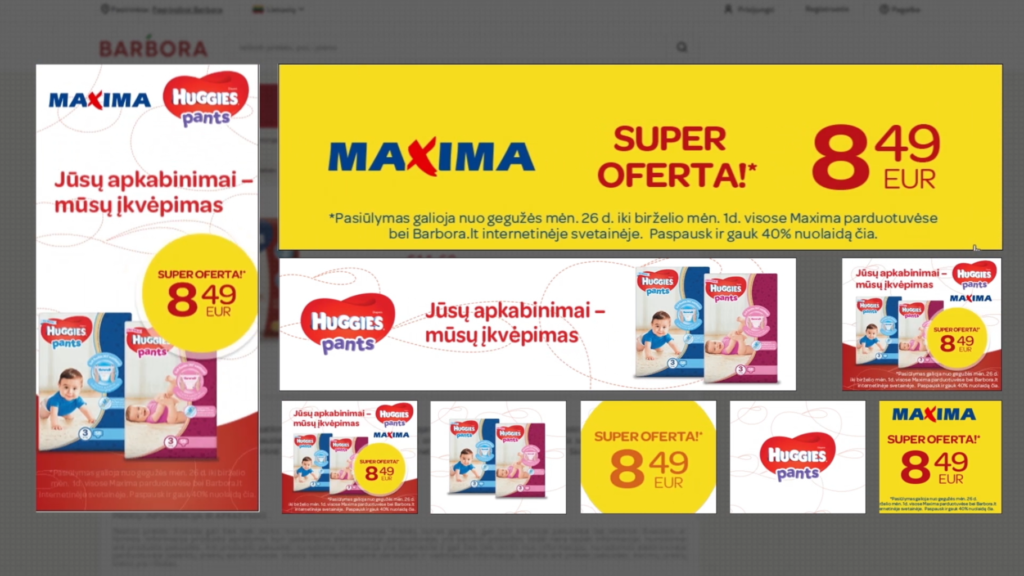
Example of promotional assets with different layouts and formats
Automation Cons:
1. Technical Know-How – operating the software and independently launching automation requires a certain level of technical expertise and familiarity with the software packages. Brand Managers with no previous experience could find it difficult to launch automation without the help of production specialists. There are two possible solutions: building an internal team or collaborating with a knowledgeable service provider who manages the platform.
2. Volume Optimisation – automation tools are not always quicker at versioning assets when the volume is low. There is a preparation part, also known as templating, before passing to the execution phase – automation. To generate 50 different versions of one asset, it could be more efficient for VFX artists to complete the job. Automation tools are more useful when volumes increase (300-400+ assets), both in terms of speed-to-market and commercial benefits.
3. Varying Cultural Nuances – should a campaign require more rigorous checks in terms of cultural and linguistic relevance, or be highly creative in nature, automation could be a less suitable solution for the job. Projects that require a significant amount of work in terms of post-production, and further adaptation in possible variations, could render the automation phase redundant.
One important note for global asset production: this also requires linguistic adaptation. Integrating language into manual/automated creative strategies drives higher campaign efficiency and should be a key consideration in early development
In short, automation has been adopted as an integral part of workflows for many production companies and these processes are being incorporated into a bigger ecosystem and comprehensive service offering.
Our team considers that a hybrid model of manual editing and AI integration has the most potential to boost content efficiency. Despite AI has becoming a prominent part of the equation, humans still play an intrinsic role and remain important.
This AI-human combination, when executed efficiently, can be leveraged to drive innovative advertising strategies and fuel dynamic content-production models. The result is the swift and high-volume generation of creative content. Versioned assets can cover both campaign-specific and personalised ad criteria for different audiences, specific consumer demographics, varying languages.

Example of an asset versioned into multiple languages and campaigns
4 Essential Tips for Automation
1. Scope Analysis
This involves pre-planning considerations for production methods. Before deciding whether to automate content, analyse whether there is a need to prioritise this production method over manual creation. In many cases it can be more cost-effective, and just as fast, to have a team generate 50-100 visual assets. Production agencies can help to establish which content generation is best for any specific campaigns. The first and primary objective is to approximate the project scope and the type of work involved.
For example, if we consider a project involving 3D modelling and animation, it could be beneficial to have human-led projects as it involves more visual adaptation and a particular skill set which is better adapted to creative professionals. Alternatively, for text overlays and subtitling it could be easier to automate content and refine with post-edits and manual checks. The level of scaling is also another important factor that should be considered in advance.
2. Clear Project Briefings:
Define a general project scope. As soon as this has been identified, teams should know whether automation is the best option for the project and have more clarity on the content roadmap. This presents an opportunity to dive into automation specifics and provide key elements for the development team, including:
a) Project complexity level (asset type, format, and relevant VFX);
b) Overall project volume (number of assets to be created, scaled, versioned);
c) Time constraints (campaign launch dates and reviewing processes);
d) Required volume of localised copy (source text and language combinations);
Each of these project areas require a certain amount of legwork and should be discussed in-depth with relevant teams and Project Managers before launching any automation or manual jobs. Bringing automation professionals in at an early stage allows for more efficient planning and improved accountability. This also helps to set accurate campaign objectives and realistic estimations for the time and resources needed.
3. Preparing Brand Templates
Brands can customise their profile and make sure that the software has successfully uploaded their brand guidelines. Customising these templates helps to ensure that brand image is consistent and the creative work is compliant. This is especially true for multibrands working to various sets of guidelines.
4. Optimised Reporting:
Automated reporting allows transparency and helps brands to keep on track and optimise their campaigns. Reporting overviews help to follow important factors such as the volume of generated assets over time, average turnaround, spending etc. Brand Managers particularly benefit from advanced reporting as this allows them to automate statistical workloads and concentrate on key tasks.
Solutions that offer powerful reporting capabilities are beneficial for tracking budget, and also help to compare brand efficiencies per product/market. Analysing campaign efficiency can lead brands to make more intelligent decisions for global campaigns and future content launches.
In a nutshell, creative content automation eliminates the more fastidious and time consuming elements of design repetition – allowing the quick, effective and high-volume generation of visual content. Using versioned assets for a wide variety of platforms, devices and channels can help to increase overall viewership and an improved global consumer demographic. This effectively provides a solution to help bridge the global content fragmentation gap and respond to the growing demand for transcreated content.
Automation is gaining momentum in both the creative and linguistic fields and harmonising language and creativity to create exceptional global content is the key for ambitious brands to reach their target audiences. This undoubtedly represents an exciting opportunity for Brand Managers, Marketing Teams and Advertising Professionals to rise to the content-creation challenge and meet insatiable consumer demands.
Contact the Locaria team to find out more on how we can help you achieve your global content marketing goals.