AI Voice: Unlocking Multilingual Synthetic Storytelling
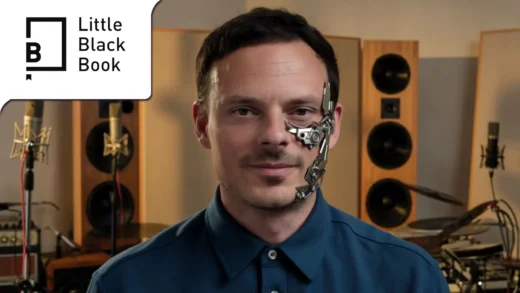
How generative voice technology is reshaping global advertising, where it beats studio recording, and where it still falls short. By Simon Ambrose.
Languages
Lower voiceover costs with AI voice cloning
Multilingual voiceover adapts the spoken audio of an ad, film, social cut or explainer into other languages, using native voice actors, AI-generated voices or both. At Locaria it is part of creative adaptation: we take your existing master creative, transcreate the script for the ear, cast or clone the voice, direct the performance and mix it back into the original edit.
Voiceover or dubbing? Voiceover is narration or an off-screen voice laid over the picture. Dubbing replaces on-screen dialogue and is timed to the actors’ lip movements. We deliver both, with native voice actors, AI voice or a cloned voice.
Why it matters: voiceover is where the script, the performance, the edit and the usage rights all have to line up, in every language. When they sit with different suppliers, scripts run too long for the cut, late copy changes mean re-records and rights end up managed in different places. One team running all of it keeps your brand voice consistent in every language.
Four ways to voice your content in every language. We recommend per asset, not by policy, and most of our work is still recorded by human voice actors.
Native voice actors from a network we built and vetted ourselves, every one interviewed by our casting director. Recorded live with in-language direction and a Locaria sound engineer on every session. Best for emotion, energy, children’s voices and real people on screen.
A voice cast from a curated synthetic library, built on ElevenLabs. Native linguists fix pronunciation, stress and accents, then our engineers edit every line to fit the video. The cost-efficient choice for tests, high-volume versions and always-on content.
Your original performance carried into other languages, with the talent’s documented consent. We remove the source-language accent so brand names sound native in every market, and native speakers review every line.
On-camera dialogue adapted so the original actor speaks every language, matched to their mouth movements.
Voiceover is where the script, the performance, the edit and the usage rights meet. Split across suppliers, every handoff is a chance for something to slip.
Scripts translated by one supplier, recorded by another
Script, casting, recording and mix handled by one team
Translated scripts that run too long for the edit
Scripts transcreated for the ear and timed to the cut
Separate studios to brief and book for each recording
Live remote sessions you can join from anywhere
Late copy changes that mean re-recording
Linguists in the session to handle changes live
Usage rights managed in different places
Usage rights negotiated directly with every actor
Agents and third-party studios between you and the talent
Direct relationships with talent, so casting moves in days
Scripts translated by one supplier, recorded by another
Translated scripts that run too long for the edit
Separate studios to brief and book for each recording
Late copy changes that mean re-recording
Usage rights managed in different places
Agents and third-party studios between you and the talent
Script, casting, recording and mix handled by one team
Scripts transcreated for the ear and timed to the cut
Live remote sessions you can join from anywhere
Linguists in the session to handle changes live
Usage rights negotiated directly with every actor
Direct relationships with talent, so casting moves in days
Human and AI voiceover aren’t better or worse versions of the same thing. They’re two different tools, and the right choice depends on what the content needs to do, who it’s talking to and your brand’s appetite for AI.
Both take craft. AI takes are prepared with native linguists, who make sure accents and brand names land, and our engineers shape every line to the rhythm of the cut. A well-cast, well-prepared actor often delivers in one to three takes. AI voice carries no usage rights, so it is usually the more cost-efficient option at scale.
AI voice is a strong fit when:
A human voice is a strong fit when:
Many brands use both, choosing asset by asset. We’ll help you decide what fits each piece of content.
“I would remove comparing AI to human from the discussion. They’re two different things, and that is fine. AI is a tool, and if it works for you, build a house with it.”
Ivana Ujcic, Casting Director & Voice-over Manager, Locaria
Six steps from master script to final mix, whether the voice is recorded, generated or cloned.

01 / Brief and master script
We start from your master script, the edit and a reference recording. Together they set the tone, timing and performance every language has to match.
02 / Transcreation for the ear
In-market writers adapt the script to sound natural spoken aloud and to fit the existing edit, so longer languages never force the voice to rush. Back-translations let your global team approve every line.
03 / Casting the voice
For human voiceover, we send a casting call to native actors in our network and share auditions with you, usually within two days. For AI voice, we cast from a synthetic voice library in the same way. For cloning, we work from the consent agreed with the original talent.
04 / Recording or generation
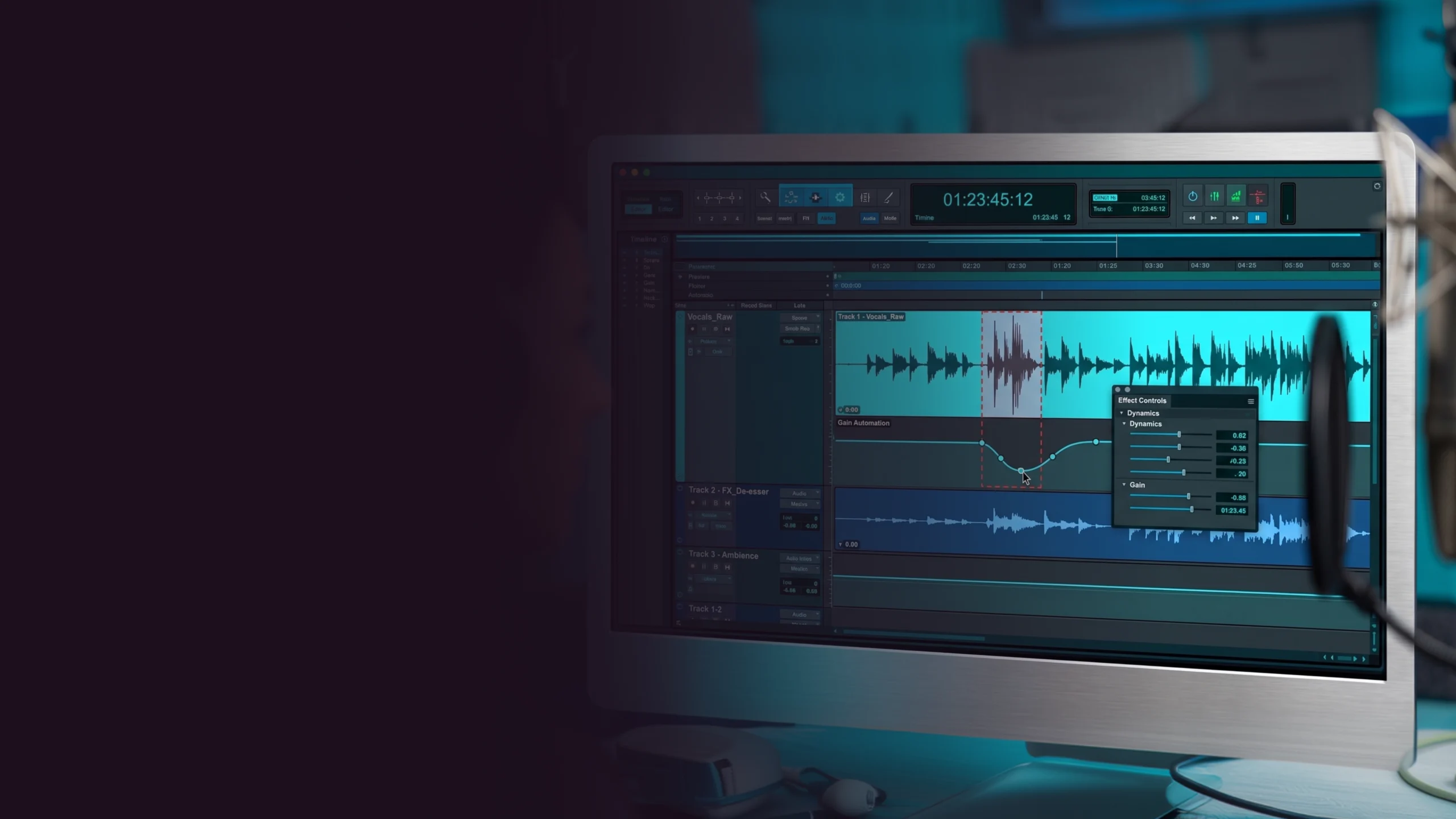
Human sessions run live online. The actor records from their own professional studio while our session director and sound engineer, and you if you like, listen in. A well-cast, well-prepared actor usually gets there in one to three takes. For AI voice, a native linguist joins a pre-production session first to fix pronunciation, accents and brand names before we present the takes to you.
05 / Edit, mix and lip-sync
Our sound engineers edit every take to the rhythm of the cut and mix it to the original film. AI takes are rebuilt word by word, sometimes down to a single vowel, until they sound natural. Lip-sync wherever there is on-camera dialogue.
06 / QC, delivery and rights
Final checks on every format and delivery to platform specs. Usage terms are agreed with every actor before release, and cloned voices are used strictly within the consent given.
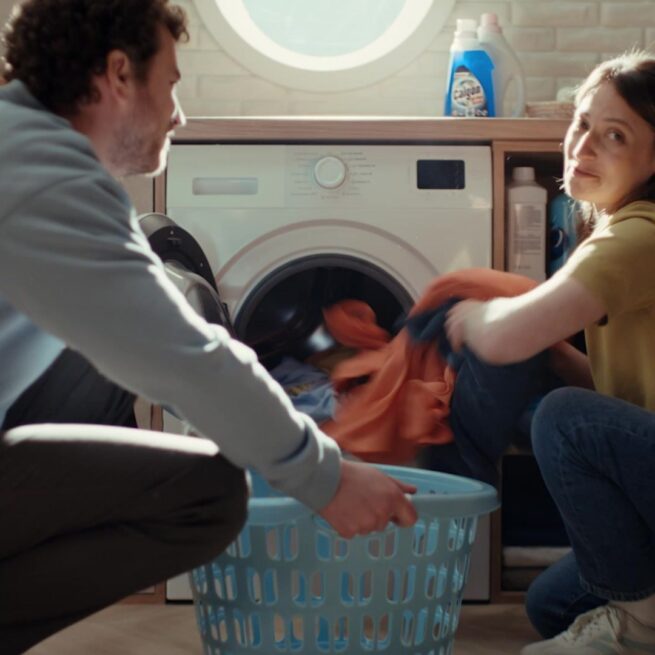
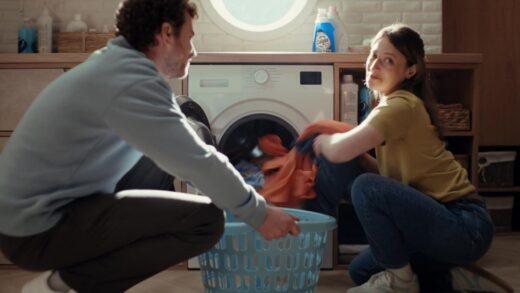
Calgon, owned by Vestacy, wanted its French campaign to work in German, Italian, Portuguese, English and Romanian without losing the performance it had cast and directed on set.
The campaign used on-camera dialogue, which international advertising usually avoids because poor lip-sync breaks the viewer’s connection with the character. With the original actor’s approval, we cloned their voice, transcreated every script to fit the edit, and refined each line with native linguists and audio engineers, including lip-sync.
“One expiry date to track instead of 20, and less risk of a market going live under a license that nobody has properly checked.”
Nadine Hagenow, Global Localisation Lead, Vestacy
We adapt voice-over for the content brands already make, from the TV master to the six-second cutdown.
Hero films, TV spots and online video adapted with native voice-over or dubbing, mixed to broadcast and platform specs.
Cutdowns, vertical edits and product videos voiced at volume, where AI voice keeps one consistent brand voice across every version.
Clear, credible narration for explainers and demos, with terminology and brand names pronounced correctly in every language.
Training, onboarding and employee communications voiced so every team hears the same message in its own language.
Radio, streaming audio and podcast ads adapted for the ear, where the voice is the whole creative.
Recruitment, culture and corporate films voiced so every office and market hears the same story in its own language.
We built our voice talent network one actor at a time. Our casting director interviews every actor before they join, and NDAs and data-protection agreements are signed up front, so we can brief talent and share auditions with you straight away.
We work directly with actors rather than through agents. That keeps casting fast and fees fair. Usage rights, usually the largest cost in human voiceover, are negotiated with the actor: territories, media, duration and renewals.
We only clone a voice with the original talent’s documented consent, usually agreed by you or your production company, and we work strictly within it. Find out more about our usage rights management and clearance service.
Practical research on using AI voice well, keeping quality as content scales and organising adaptation across markets.
How generative voice technology is reshaping global advertising, where it beats studio recording, and where it still falls short. By Simon Ambrose.
Why multilingual content is far more than translation, and why AI strengthens the case for skilled language specialists. An essay by Locaria founder Hannes Ben.

Why fragmented, market-by-market adaptation is no longer sustainable, and what a centralised creative adaptation system does differently. By Simon Ambrose and Jimena Ortega.
Every beautiful relationship begins with a simple hello. So let’s chat. It might be the start of something.
What is the difference between voiceover and dubbing?
Voiceover is narration or an off-screen voice laid over the picture. Dubbing replaces on-screen dialogue and is timed to the actors’ lip movements. Locaria delivers both, with native voice actors, AI voice or a combination.
Should I use AI voiceover or human voice actors?
It depends on the asset, your audience and your brand’s appetite for AI. They are different tools rather than better or worse versions of each other. Human voice actors bring emotion, energy, character and children’s voices, and suit real people on screen. AI voice suits fast creative testing, high-volume versions and always-on content, with one consistent voice across markets. Many brands use both, and we recommend the right approach for each asset.
Can AI voice cloning keep the original actor’s performance?
Yes, when it is directed properly. A cloned voice keeps the tone, timbre and rhythm of the original performance in another language. Native linguists and audio engineers then refine pronunciation, pacing and emphasis until every line sounds natural.
Do you need the voice actor’s consent to clone their voice?
Yes. We only clone a voice with the original talent’s documented consent, covering where, how and for how long the cloned voice can be used. This is usually agreed by you or your production company when the original is recorded, and we work strictly within it.
How long does multilingual voiceover take?
It depends on the number of languages, the length of the content and the approach. For human voiceover, we usually share auditions within two days of a casting call, and a well-prepared actor typically delivers in one to three takes. For AI voice, we build in time for native linguist review and editing every line to the cut. We scope timings with you upfront so they fit your launch.
How much does multilingual voiceover cost?
Cost depends on the number of languages and formats, the length of the script, human or AI voice, lip-sync requirements and the usage rights needed. Usage rights are usually the largest part of a human voiceover fee, which is why AI voice costs less: a synthetic voice has none. On one campaign, AI voice cloning cut voiceover costs by 75% compared with traditional casting and studio recording.
How do you stop translated scripts running too long?
We transcreate scripts for the ear rather than translating them word for word. In-market writers adapt each line to fit the existing edit, so the voice never has to rush to fit the timing.
Which languages do you cover?
Locaria works in 83 languages through more than 1,400 in-market linguists. Tell us which markets you need and we will confirm voice talent, AI voice availability and timings for each.
Do you create the original ad or film?
No. Locaria adapts existing creative. We take your master assets, or your creative agency’s, and make them work in every language, format and market.
Is AI voiceover faster than human voiceover?
Not always. The tool generates a take in seconds, but a natural result in every language comes from native linguist review, correct pronunciation of names and brand terms, and editing every line to fit the video. Where AI voice stands out is cost and scale: there are no usage rights, and one voice can run across many versions and markets. We plan the schedule around whichever approach you choose.
Can I join the recording session?
Yes, and we encourage it. Sessions run live online: the actor records from a professional studio while you, our session director and our sound engineer listen and give feedback in real time. For AI voiceover, you join a review session where we play takes already checked by a native linguist.
Can we clone a voice from our existing campaign?
Yes, if the original talent agrees. You or your production company secure their documented consent, then we clone the voice, remove the source-language accent so brand names sound native, and refine every line with native linguists. That is how we carried one French performance into five languages for Calgon.
So let’s chat. It might be the start of something.
Contact us