Performance Production – Scaling Global Content
How to scale multilingual content across markets and channels without losing quality or control: four learnings from performance marketing. By Lindsay Hong.

Post-production adaptation changes a finished ad so it works in another market: replacing packs and products, swapping signage and screens, rebuilding localised graphics and matching the grade. It uses the footage you already have, so there is no new shoot.
Adaptation or original post-production? We don’t shoot or originate campaigns. We take over once the master is approved and adapt it, working alongside your production company and post house rather than replacing them.
Why it matters: a single pack change, a product not sold in one country or a sign that gives away the source market can stop a film running. A reshoot per market multiplies production cost, talent fees and time. Adapting the picture keeps one creative investment working everywhere.
Cutdowns and new supers are an edit. When the product, the pack or the world on screen has to change, the work moves into compositing, 3D and grading.
Local languages, regulatory marks, sizes and recycling symbols on the pack itself.
Flavours, variants or models replaced or removed where they aren’t on shelf, so the ad shows what each market can actually buy.
Shop fronts, posters, phone screens and street signs that give away the source market.
Local inserts and pickups graded to sit with the master, so the brand looks the same everywhere.
Craft-level finishing, organised for multi-market rollouts.
Local packs tracked into moving shots and hero packshots, with lighting, reflections and motion matched to the master.
Accurate 3D models built from your pack artwork, so dozens of SKUs and languages can be rendered from one model and reused in future campaigns.
Signage, screens and in-scene text replaced, and products, logos or details removed where a market requires it.
Local footage, inserts and packshots graded to match the master and your brand colour standards.
On-screen graphics, animated type and product callouts rebuilt so local text moves naturally in the scene.
Online, conform and QC to broadcast and platform specs. Cutdowns, reframes and subtitles go through our video versioning team in the same workflow.
AI tools can swap a product in seconds, and for some placements that’s enough. For broadcast and hero work, detail has to hold up frame by frame. We recommend the technique shot by shot.
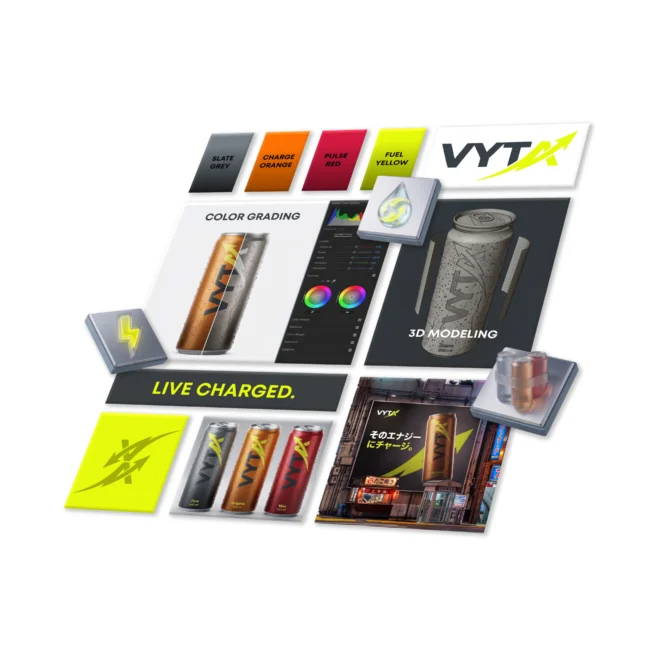
AI-assisted replacement
Best for: static or simple shots, fast social variants and early checks. Watch out for: warped typography, inaccurate pack details and flicker between frames. We use it for paid social and lower-risk placements, and an artist reviews every frame.
2D tracking and compositing
Best for: label and artwork changes on packs that move simply, plus signage and screens. Watch out for: complex rotation or hands covering the product. This covers most label, claim and signage changes.
3D CGI pack
Best for: hero packshots, rotating products and many SKUs or languages from one model. Watch out for: it needs accurate artwork or CAD to build the model. Ideal for range-wide rollouts and end-frame packshots.
Reshoot
Best for: shots where product interaction is central and nothing else will look right. Watch out for: cost, time and talent usage for new footage. It is rarely needed, and we’ll tell you when it is the better route.
Most market changes don’t need new footage. They need the right technique and a team that can apply it consistently.
A new shoot every time a pack or product changes
Packs and products replaced in the existing footage
Each market’s post house matches the master its own way
One team matching grade and finish across every market
3D packs rebuilt for every campaign
CGI models built once and reused
AI swaps that don’t hold up on a big screen
AI where it works, compositing or CGI where it matters
Legal and claim changes found late at clearance
Approved claims and marks built in before review
Talent and music rights unchecked for new versions
Usage rights tracked against every adapted version
A new shoot every time a pack or product changes
Each market’s post house matches the master its own way
3D packs rebuilt for every campaign
AI swaps that don’t hold up on a big screen
Legal and claim changes found late at clearance
Talent and music rights unchecked for new versions
Packs and products replaced in the existing footage
One team matching grade and finish across every market
CGI models built once and reused
AI where it works, compositing or CGI where it matters
Approved claims and marks built in before review
Usage rights tracked against every adapted version
Final pack artwork and dielines for each market, or 3D and CAD files if you have them. The graded master and textless version, and ideally project files and clean plates. Reference photography of the physical pack. Approved claims, regulatory marks and legal copy for each market, and the grading notes or LUTs from the original post house.
If something is missing, we’ll tell you what it means for quality and cost before we start. Compositors, 3D modellers, motion designers, colourists and finishing editors work from our centralised adaptation hubs, backed by a vetted global talent pool, and your markets review through Adaptria and Frame.io with every change tracked to its version.
Research on producing content at scale and organising adaptation across markets.
How to scale multilingual content across markets and channels without losing quality or control: four learnings from performance marketing. By Lindsay Hong.

Why fragmented, market-by-market adaptation is no longer sustainable, and what a centralised creative adaptation system does differently. By Simon Ambrose and Jimena Ortega.

Why multilingual content is far more than translation, and why AI strengthens the case for skilled language specialists. An essay by Locaria founder Hannes Ben.
Every beautiful relationship begins with a simple hello. So let’s chat. It might be the start of something.
What is post-production adaptation?
Post-production adaptation changes a finished ad so it works in another market: replacing packs and products, swapping signage or screens, adding localised graphics and matching the grade. It uses the existing footage rather than a new shoot.
Can you replace a product or pack without a reshoot?
In most cases, yes. We use 2D tracking and compositing for label and artwork changes and 3D CGI models for hero packshots or complex movement. We review the shots first and tell you if any would look better reshot.
Will an AI product swap hold up on TV?
Sometimes, for simple shots. AI tools can distort typography and small pack details or flicker between frames, which shows on a large screen. We use AI where it is reliable with an artist checking every frame, and for broadcast hero shots we usually composite or render in 3D.
What do you need from us?
Pack artwork for each market, the graded master and textless version, and ideally project files, clean plates and reference photography. 3D or CAD files speed up CGI work but aren’t essential.
How is this different from video versioning?
Video versioning covers edits: cutdowns, reframes, supers, subtitles and end frames. Post-production adaptation changes the picture itself. Most campaigns need both, and the two teams work in the same workflow.
Can you match the original grade and finish?
Yes. Our colourists match local inserts and packshots to the master, ideally using the original grading notes or LUTs from your post house.
Can you deliver broadcast-ready files for every market?
Yes. We finish and QC to each broadcaster’s and platform’s technical specs and supply textless and clean versions alongside the masters.
How much does post-production adaptation cost?
It is priced per shot or per version, depending on technique. 3D models are quoted once and reused across markets and future campaigns. We confirm the technique and cost for each shot before work starts.
Do you shoot or create the original ad?
No. Locaria adapts existing creative. We take over once the master is approved and keep your production partners informed, so we complement them rather than compete.
So let’s chat. It might be the start of something.
Contact us