The Case for Centralising Creative Adaptation Systems
Why fragmented, market-by-market adaptation is no longer sustainable, and what a centralised creative adaptation system does differently. By Simon Ambrose and Jimena Ortega.
Languages
In-market linguists
Formats adapted from one French master
Follow-the-sun delivery across three hubs
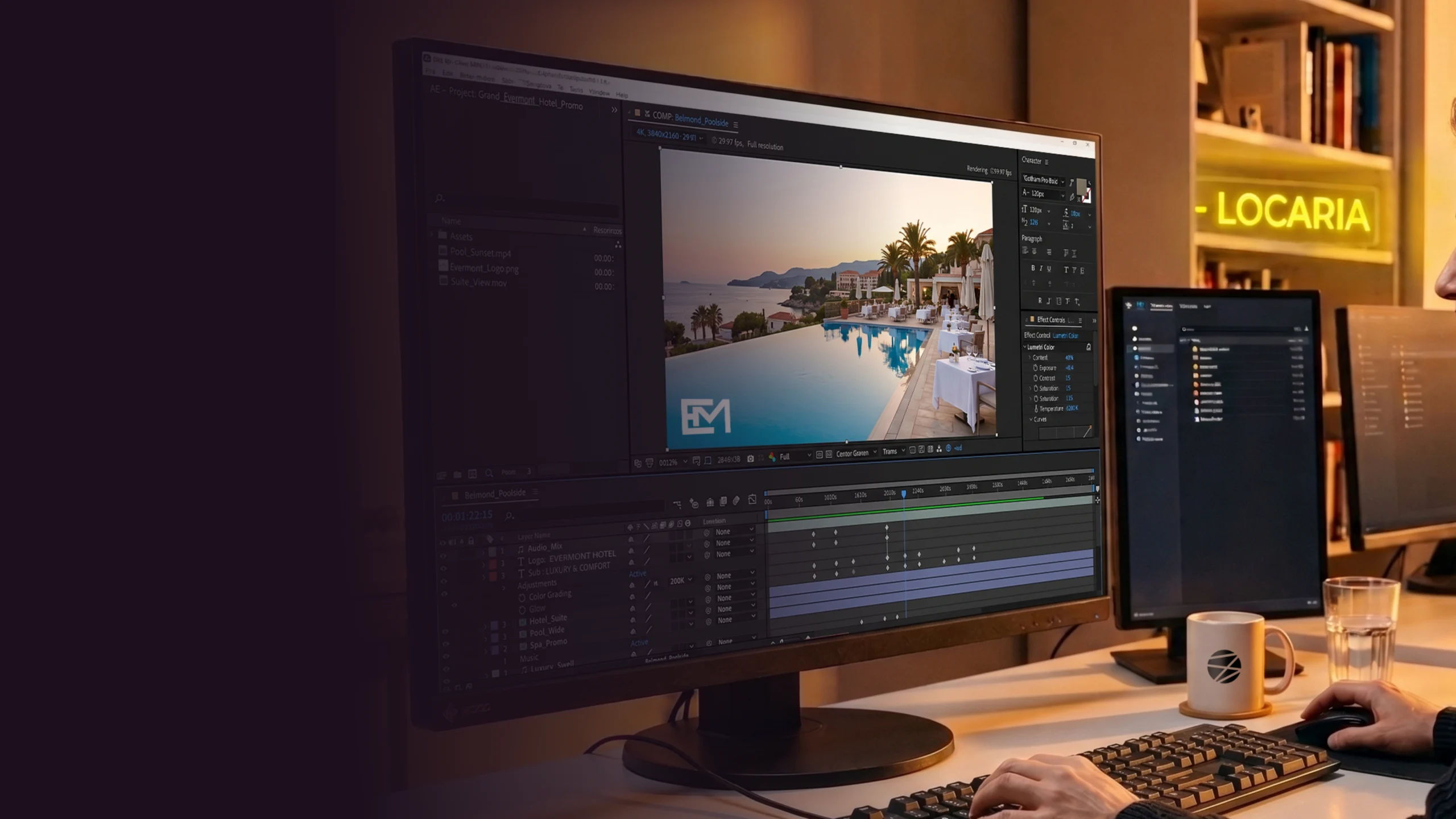
Video versioning is the work that happens after the master is approved: new durations, aspect ratios, languages, legal lines, end frames and delivery specs for every platform and market. At Locaria it is part of creative adaptation. We take your existing master, or your creative agency’s, and build every version from the source files.
Versioning or video localisation? Localisation usually means changing the language through subtitles, dubbing or voiceover. Versioning covers everything else a market or platform needs as well. Most global campaigns need both, and we run them in one workflow, with multilingual voiceover handled by our audio team.
Why it matters: one 30-second film in four durations, four aspect ratios and ten languages is already 160 versions before local legal and pricing changes. Split across local agencies and edit suites, pacing drifts, supers get retyped by hand and nobody can say which version is approved where.
Everything a market needs to go live, rebuilt at project level in Premiere Pro and After Effects rather than cropped from a flattened export.
30, 20, 15, 10 and 6 second edits that keep the story and the brand moment, recomposed shot by shot for 16:9, 1:1, 4:5 and 9:16 with platform safe zones respected.
Transcreated supers typeset in the right fonts and scripts, including right-to-left and CJK. Market-specific legal copy, local logos, URLs, pricing and offer end frames built from your templates.
Burnt-in or sidecar subtitle files (SRT, VTT), written by native speakers and timed to picture.
Local voiceover laid and mixed to loudness specs, textless masters, and named, spec-checked files for every platform and broadcaster.
The master is rarely the problem. The hundreds of versions that follow it are.
Each market re-edits the master its own way
Every version built from the same project files and rules
Supers and legal lines retyped by hand
Transcreated supers checked by native speakers in context
Missed safe zones and specs bounce back at trafficking
Automated spec, safe-zone and naming checks on every file
Every reframe treated as a crop
Automation for first passes, editors for shots that need judgement
Feedback scattered across email threads
Frame-accurate review links and one approval record per market
Weeks lost waiting for local edit suites
Follow-the-sun production across three time zones
Each market re-edits the master its own way
Supers and legal lines retyped by hand
Missed safe zones and specs bounce back at trafficking
Every reframe treated as a crop
Feedback scattered across email threads
Weeks lost waiting for local edit suites
Every version built from the same project files and rules
Transcreated supers checked by native speakers in context
Automated spec, safe-zone and naming checks on every file
Automation for first passes, editors for shots that need judgement
Frame-accurate review links and one approval record per market
Follow-the-sun production across three time zones
Templated automation is fast for repeatable changes. It struggles with layered project files, long translations and reframes that need a creative eye. Each version goes down the route that suits it.
Smart cropping handles shots where the action sits centrally. Where a crop would cut off product, faces or supers, an editor recomposes the shot. We automate a first pass and an editor checks every shot.
Dynamic text scaling works inside locked templates for short lines. When German, Finnish or other long-copy languages break the timing or layout, our motion designers rebuild the animation.
Rarely a job for automation. Editors re-cut for pace, story and the brand moment, and every cutdown is signed off against the master.
Data-driven templates when there are many SKUs, retailers or offers and the layout is fixed. Hero end frames are built by hand.
Automated checks for specs, safe zones, loudness and file naming, plus native-speaker review of language and cultural fit. Every version gets both.
Safe zones, loudness, frame rates and file formats are checked automatically for every platform and broadcaster, and an editor resolves anything that fails before delivery.
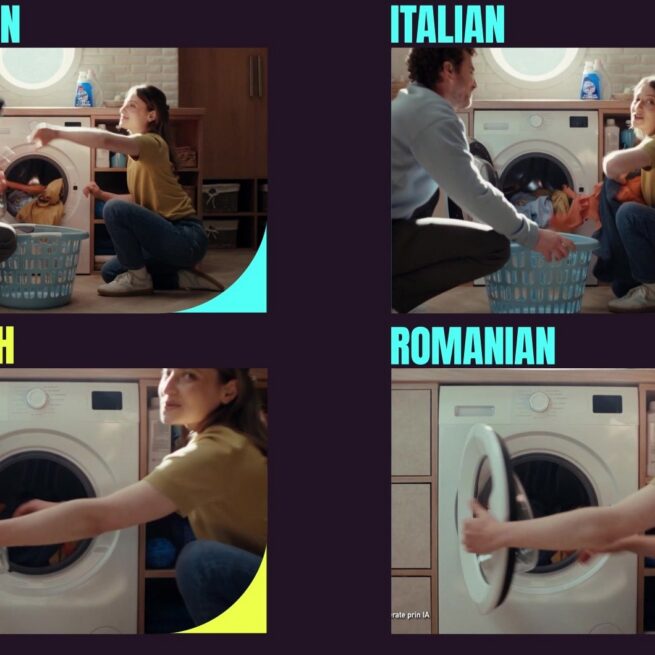
Calgon, owned by Vestacy, needed its French master campaign to run in German, Italian, Portuguese, English and Romanian, across TV and digital.
We transcreated every script to fit the existing edit, adapted the on-screen text for each market and versioned the films into 22 formats from one set of masters. With the original actor’s approval, AI voice and lip-sync carried the original performance into every language, refined by native linguists, editors and audio engineers.
Six steps from approved master to every market, with the same checks whether a version is automated or edited by hand.

01 / Brief and version plan
We map every duration, aspect ratio, language and market variant against your media plan, so you see each deliverable and its cost before work starts.
02 / Templates and rules
Type styles, safe zones, legal rules and naming conventions are set once, centrally, and applied to every version.
03 / Edit and build
Editors, motion designers and automation produce the versions, each routed by the complexity of the change.
04 / Language QA
In-market linguists check supers, subtitles, legal lines and cultural fit in the picture, not in a spreadsheet.
05 / Market review
Local teams comment on frame-accurate review links. Every change is tracked against its version in Adaptria, our adaptation platform.
06 / QC and delivery
Spec-checked, consistently named files go to your DAM, media agency or broadcasters, with a record of which version is approved for which market.
Project files (Premiere Pro, After Effects) or a textless master give the best results, because every change is rebuilt rather than patched. Split audio stems, fonts, brand guidelines, end frame templates and the approved legal lines for each market all speed things up. If the scripts still need adapting, our transcreation team can write them.
Only have a flattened final? We can still version it, and we will tell you up front which changes need source files. When the picture itself has to change, such as a local pack or product, our post-production adaptation team handles it in the same workflow, and talent and music permissions for each new version can be checked through our usage rights management service.
Research on organising adaptation across markets, producing content at scale and keeping quality as volumes grow.
Why fragmented, market-by-market adaptation is no longer sustainable, and what a centralised creative adaptation system does differently. By Simon Ambrose and Jimena Ortega.

How to scale multilingual content across markets and channels without losing quality or control: four learnings from performance marketing. By Lindsay Hong.
Why multilingual content is far more than translation, and why AI strengthens the case for skilled language specialists. An essay by Locaria founder Hannes Ben.
Every beautiful relationship begins with a simple hello. So let’s chat. It might be the start of something.
What is video versioning?
Video versioning turns one approved master film into all the variants a campaign needs: different durations, aspect ratios, languages, legal lines, end frames and delivery specs. It happens after the original production and before trafficking or broadcast.
What is the difference between video versioning and video localisation?
Video localisation usually means changing the language, through subtitles, dubbing or voiceover. Versioning also covers cutdowns, reframes, supers, end frames and specs. Most global campaigns need both, and Locaria runs them in one workflow.
Which formats and durations can you deliver?
We deliver 16:9, 1:1, 4:5 and 9:16 versions and any duration your media plan needs, typically 30, 20, 15, 10 and 6 seconds, built to the specs of each platform and broadcaster, including safe zones, loudness and file formats.
Do you need our original project files?
Project files and a textless master give the best results. We can still version a flattened final film, and we tell you before we start which changes need source files.
How do you handle local legal lines and disclaimers?
You supply the approved wording for each market, or our linguists translate it for your approval. We time, size and position it to each market’s requirements and record which version carries which wording.
When do you use automation and when do you use editors?
We automate repeatable, template-led changes such as simple text swaps, first-pass reframes and spec checks. Editors handle cutdowns, recomposition, long-copy languages and anything that needs creative judgement. A person checks every version before it goes to review.
How long does multi-market video versioning take?
It depends on the number of versions, the source files and your review rounds. Our three nearshore hubs work across time zones, so production continues overnight against launch dates. You get a timed version plan before work starts.
How much does video versioning cost?
Usually priced per version and grouped by complexity, with set-up for templates and rules quoted once. High-volume and always-on programmes can run on a retainer. The version plan shows the cost of each deliverable before you approve the work.
Do you create the original ad or film?
No. Locaria adapts existing creative. We take your master film, or your creative agency’s, and make it work in every market, format and language, so we work alongside your agency rather than competing with it.
So let’s chat. It might be the start of something.
Contact us