








The more markets you run content in, the more contracts, licences, and permissions pile up behind it. Talent agreements, voiceover clearances, and visual asset rights are easy to lose track of once production is decentralised.
Without a central view, markets can end up working from different terms, costs can overlap and assets may be reused without visibility of the permissions originally agreed.
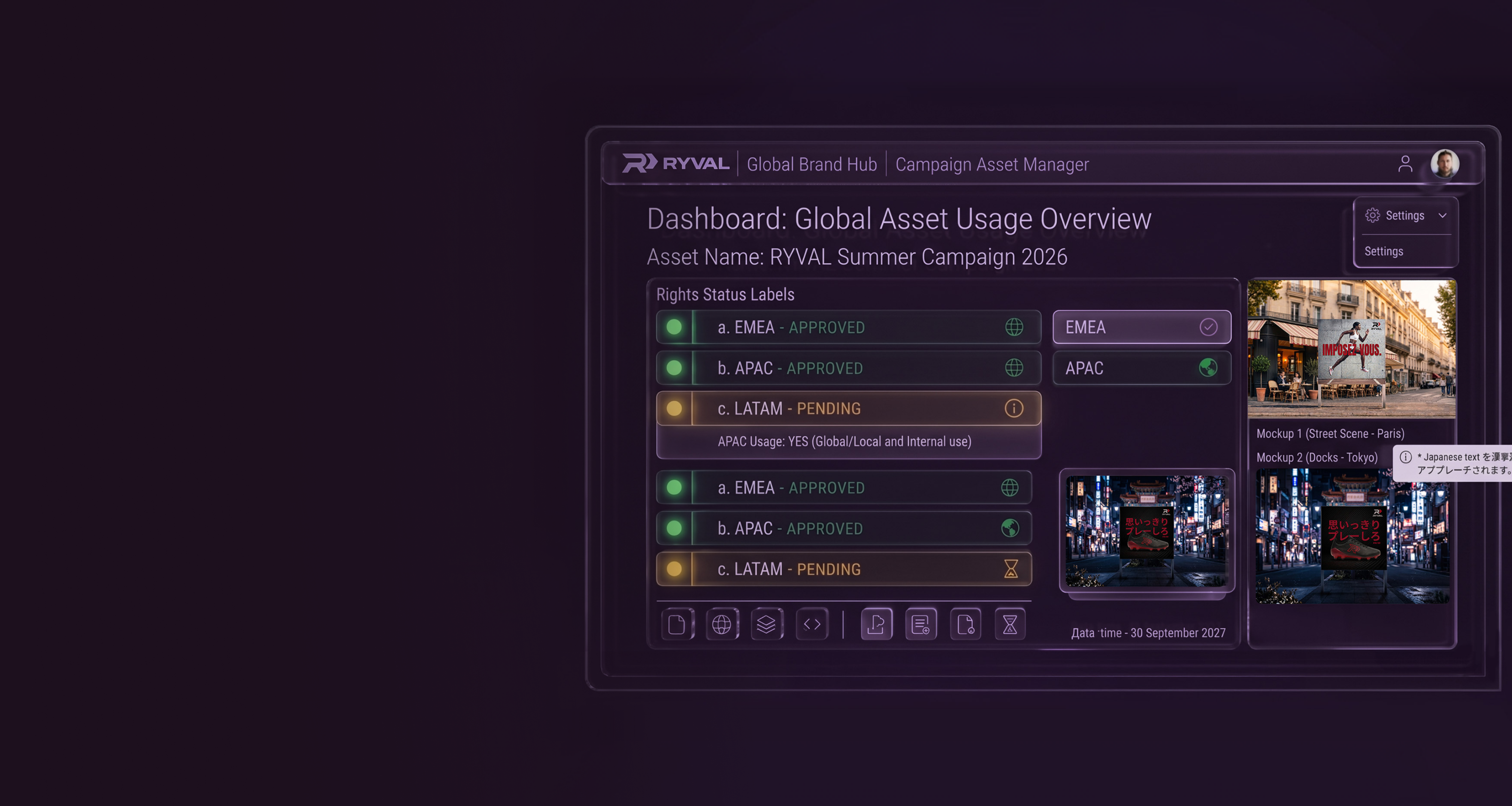
We build usage-rights tracking into the way we manage multimarket content, helping your teams maintain a clear view of what can be used, where and for how long.
What we keep on top of for you

Talent and voiceover
A central record of agreed usage terms by talent, language, market and campaign.

Visual assets
Visibility of the licence and usage terms attached to assets before they are reused or adapted.

Version control
A clear record of which versions have been approved for use in each market.
One central view across markets
Centralising usage-rights information gives global teams greater visibility over the permissions attached to their content.
It can also help procurement teams negotiate more comprehensive multi-market or global buyouts at the master production stage, rather than addressing usage market by market later.
Within the adaptation workflow, we track the agreed terms associated with talent, voiceover and visual assets by market, language and campaign. When an asset is being adapted or reused, teams can see the relevant usage information and flag where further clearance may be needed.
Managing AI and synthetic voice responsibly
AI and synthetic voice are creating faster, more scalable ways to produce multilingual content, but they also introduce new questions around consent, usage and governance.
We help build your organisation’s requirements into the production process:
- Working to your internal policies and approved processes for AI and synthetic content
- Tracking the permissions and usage terms associated with talent, voices and source assets
- Building clear governance into the workflow so teams know which methods and assets are approved for use
For a closer look at scaling AI voiceover well, see our guide to AI voiceover.
Keep usage rights visible as your content scales
Talk to us about building usage-rights management into your multimarket content production.
Get in touchFAQs
Every beautiful relationship begins with a simple hello. So let’s chat. It might be the start of something.
Why does usage rights management matter for global campaigns?
Managing talent, audio and visual assets across multiple territories creates a growing web of contracts, licences and usage terms. Without a central view, it becomes harder to know what can be used where, for how long and across which channels.
Locaria builds usage-rights tracking into multimarket content production, helping global teams maintain visibility of agreed terms and reduce the risk of assets being used outside them.
What's wrong with letting local markets handle their own talent and rights?
When usage rights are managed independently by different markets, agreements can become fragmented. Terms may vary, costs can overlap and global teams can lose visibility of when or where an asset is cleared for use.
Centralising that information makes it easier to manage content consistently as campaigns expand into new markets.
How do you make sure an asset isn't used beyond what's agreed?
We keep a central record of the usage terms associated with talent, voiceover and visual assets by market, language and campaign. Before an asset is reused or adapted, those terms can be checked and any need for additional clearance flagged to the relevant team.
Do you negotiate rights for us, or manage what's already in place?
Our role is primarily to help manage and track the usage terms agreed by your procurement, legal and production teams.
Where global procurement negotiates multi-market or global buyouts, we can carry those terms through the production workflow so teams have a clear view of what has been agreed. Where market-specific agreements already exist, we help bring that information into one central process.
What are the legal risks of using AI-generated voice?
AI and synthetic voice introduce different considerations around consent, licensing, voice cloning and the use of source material. The requirements can also vary depending on the technology being used and your organisation’s own policies.
We work within your approved legal and procurement framework, keeping relevant permissions and usage terms connected to the production process and flagging where additional approval may be required.




Get Started
Every beautiful relationship begins with a simple hello.
So let’s chat. It might be the start of something.
Contact us