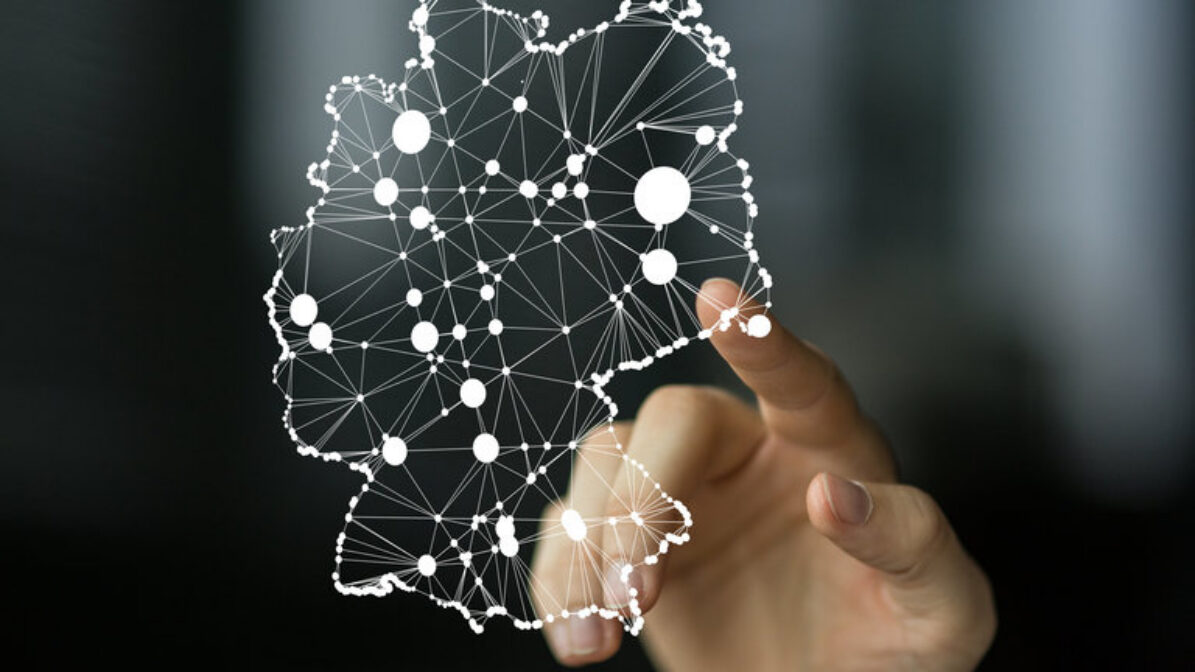
It’s 2018, and fast broadband internet is still considered a luxury asset in Germany. This isn’t fake news. However, a newly proposed German coalition between Merkel’s Conservatives and the Social Democrats has considered making access to fast internet a legal right by 2025. Only 42% of all Germany based companies currently have access to fast broadband, owing to Germany’s mid-range position in a Europe-wide comparison. It is hoped that this proposed bill would improve the digital landscape across Germany in areas lacking internet ac, as well those with low internet speeds.
Nonetheless, Germans are spending almost 5 hours per day on the World Wide Web. As well as consuming other forms of media, 74% of German customers did their shopping online in 2017. Many consumer decisions are based on influencers, with every sixth person aged between 14 and 29 years of age having already bought a product that was advertised by an influencer. After food, beauty products are the second most purchased product nationwide.
Although spending money online doesn’t appear to be a problem for most Germans, using mobile banking is a different story, with only 22% currently using this feature on mobile devices.
Speaking of mobile devices, mobile broadband connection in Germany is at 111%. This is quite high when you consider that in most areas, both urban and rural, fast internet is very rare. Once on their mobile devices, people are using the messaging app WhatsApp daily and hence, it’s even more popular than Facebook, Instagram, or YouTube.
In summary, the lack of access to fast internet does not affect the shopping behaviour of German consumers at all. Quite the contrary: they love online shopping and discovering new products on their mobile devices, especially when recommended by influencers – even if it takes a bit longer to get online. Should the German government manage to improve countrywide access to fast internet, this particular market has a huge potential for further growth.
- 2/3 of the world’s population now has mobile devices
- Smartphones are the favourite device to go online (52%), followed by laptops and desktops.
- People spend 7 times longer using mobile apps than mobile web browsers
- Facebook: 95% via smartphones or tablet, 31% via laptop or desktop
- 11 new users per second on social media
- 1 Million people started using Social Media for the first time in the past year
- 15% more users in Germany, 13% in Poland
- Older people are joining SM as well, only on Facebook are the people over 65 years increasing by 20%
- Filipinos spend almost 4h/day on social media, Portugal, USA and UK spend about 2h/day, Germany only a bit more than 1h
- Facebook dominates the social landscape with 2,16 billion users, YouTube 1,5 billion, Instagram 800 Million
- Organic reach and engagement has dropped, reach down by 10%
- Under the worldwide average of active accounts are accessing via mobile compared to population
Sources:
http://www.ard-zdf-onlinestudie.de/files/2017/Artikel/Kern-Ergebnisse_ARDZDF-Onlinestudie_2017.pdf
https://wearesocial.com/blog/2018/01/global-digital-report-2018
https://www.broadbandsearch.net/blog/average-daily-time-on-social-media
https://www.emarketer.com/Article/Germanys-Digital-Display-Ad-Spending-Beat-Expectations-2016/1015303