Where is it used?
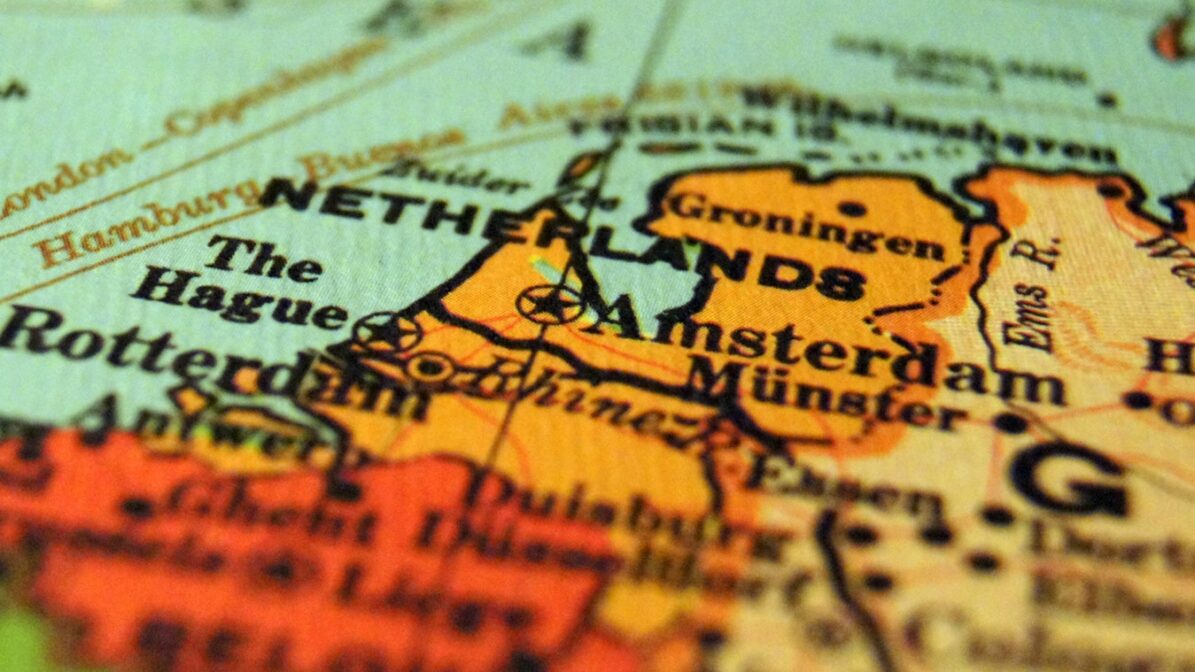
Dutch, or a variant of, is spoken by close to 24 million people worldwide and is the native language in the Netherlands, Suriname, Caribbean islands of Aruba, Curaçao, Sint Maarten and Belgium. Afrikaans, a daughter language, is mainly spoken in South Africa and Namibia.
In this post however, the focus will be on the difference between spoken and written Dutch used in the Netherlands and in neighbouring country Belgium.
Dutch vs. Flemish
Dutch, otherwise known as Standard Dutch, is the native language in the Netherlands. Flemish on the other hand is a regional variety of standard Dutch that is used in Flanders, the northern part of Belgium, where, together with French and German, it is one of the three official languages.
Although Flemish is not an actual language on its own, it has various phonological, lexical and even grammatical features that sets it apart from Dutch used in the Netherlands.
Pronunciation
When listening to or conversing with native speakers of Dutch and Flemish the first thing that will usually stand out for non-natives is that the pronunciation can be quite different. Dutch people often say that their Dutch-speaking neighbours have a softer accent, as Dutch uses much stronger tones.
A short illustration below:
- To pronounce the letter “g” Dutch people have a strong guttural sound that is mostly used in the North of the Netherlands. Belgian people use the much softer “g” (that almost sounds like a hissing sound) which is more common in the southern parts of the Netherlands and in Flanders.
- Dutch people stretch the pronunciation of the diphtongs “ij”, ei”, “ou”, “au”, “ui”, “ee”, “oo”, “eu”. These sounds are pronounced much shorter in Flanders.
- The “r”-sound can be produced as a guttural sound (Like the French “r”) or with the tip of the tongue
- The “Z” often becomes an “S” in Dutch
- The “V” often becomes an “F” in Dutch
Vocabulary
Both Dutch and Flemish have their own characteristic words, terms and typical expressions. They even use different word orders and verb placements.
Some examples:
- “amai” (very typical Flemish exclamation, mostly used when being impressed or to express surprise or disbelief)
- Flemish people will often use the French “Ça va?” (“How are you?”) to ask how someone is doing
- Flemish people use the dialect word “Frigo” to refer to a fridge, something Dutch people don’t say
- To suddenly get scared:
– NL: “schrikken”
– BE-NL: “verschieten” - To have fun:
– NL = “zich vermaken”
– BE-NL: “zich amuseren” - To clean:
– NL = “poetsen”
– BE-NL = “schoonmaken” or “kuisen” - Meaning of “schoon” in NL = if something is clean
- Meaning of “schoon” in BE-NL = if someone or someone is beautiful
Foreign influences
Dutch in the Netherlands often uses English pronunciations and loanwords. However, as Belgium has a large amount of French speakers in the southern part of Belgium (Wallonia) Flemish is more influenced by French.
Some examples:
- EN: “jam”
– NL = “jam”
– BE-NL = “confituur” (FR = “confiture”)
- EN: “cup”
– NL = “kop”
– BE-NL = “tas” (FR = “tasse”) - EN: “uncle”
– NL = “oom”
– BE-NL = “nonkel” (FR = “oncle”)
Formal and informal
The formal “U” in Dutch to address people that you don’t know is still in use in the Netherlands, although much less so than in Belgium. Most Dutch people will use “je” or “jij” when speaking to strangers, which would often be considered impolite in Belgium.
When among friends & family or people they know well, Belgian people will often say “gij” or “ge” instead of “jij” or “je”. This is a contracted informal form that is very typical to Flanders and can sound a little strange to Dutch people, as it is only commonly known in the South of the Netherlands.
In our next post we will explain how distinctions between Dutch and Flemish can impact your online marketing efforts in the Netherlands and Belgium.
Sources:
https://www.smartling.com/blog/top-differences-flemish-dutch/
https://www.duolingo.com/comment/11988132/What-is-the-difference-between-Dutch-and-Flemish
http://languagetsar.com/differences-between-dutch-in-the-netherlands-and-belgium/
http://www.globallanguageservices.co.uk/dutch-and-flemish-whats-the-difference/
http://www.bbc.co.uk/languages/yoursay/language_and_identity/dutchflemish/flemish_far_more_than_a_dialect_of_dutch.shtml
https://www.flandersliterature.be/about-our-book-market
https://www.britishcouncil.org/voices-magazine/why-should-we-learn-dutch
http://www.translationartwork.com/differences-between-flemish-and-dutch/
https://www.thetranslationpeople.com/2005/05/46/