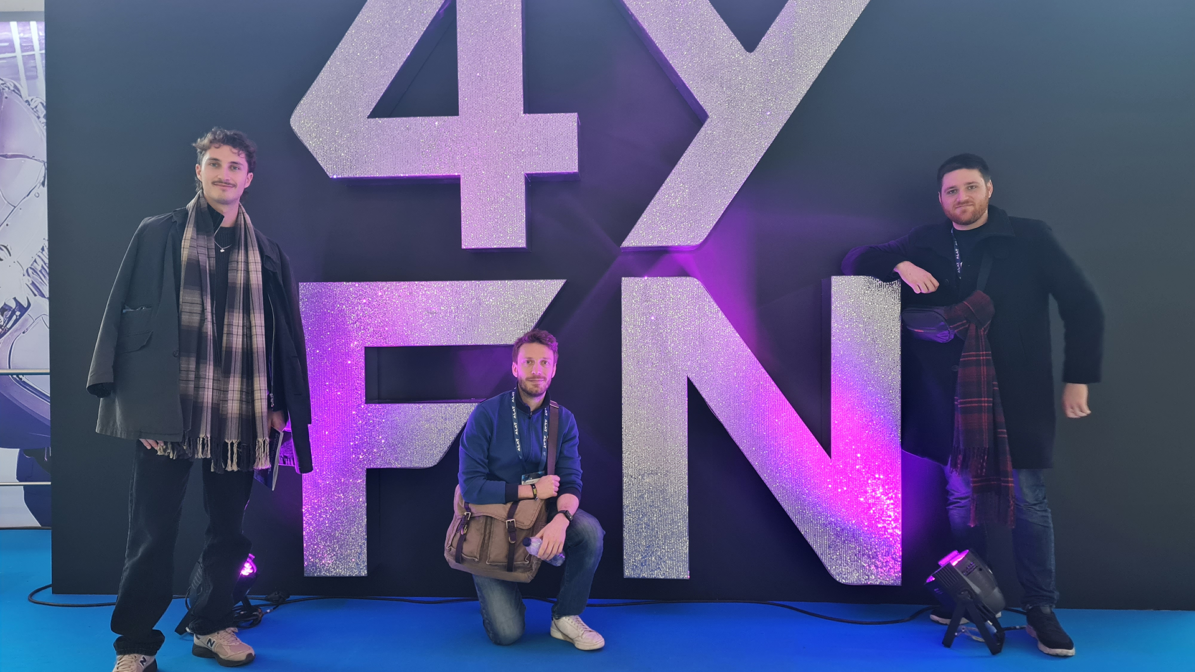

BARCELONA — In the shadow of Gaudí’s skyline, a different kind of architecture was on display last month: the scaffolding of tomorrow’s AI, automation, and digital ecosystems. From the sprawling pavilions of Mobile World Congress (MWC) to the start-up energy of Talent Arena, Barcelona played host to a collision of algorithms, ethics, and edge-case innovation. Locaria’s data and tech team was on the ground, soaking up insights not just for today’s workflows, but for the strategic challenges of the next wave.
Representing Locaria were Francisco Ibáñez Ballester, Data Integration and Enablement Specialist; Miguel Siedi, Senior Analyst in Search & Data Performance; and Pablo García Prado, Junior Data Scientist.
AI and Automation Take Centre Stage at Talent Arena
At the Talent Arena, one of the most compelling topics of discussion was AI-driven automation, particularly how it can streamline complex processes across industries. AI is transforming not just creative fields, but also data-centric roles that require processing large amounts of information. Francisco Ibáñez Ballester, our Data Integration and Enablement Specialist, attended a session on how AI and robotics are being integrated to automate tasks previously thought to be beyond reach. This technology, when applied to processes like content creation and translation, could significantly improve efficiency, allowing teams to focus on high-value tasks while the AI handles the heavy lifting.
Pablo García Prado, Junior Data Scientist at Locaria, was also struck by the way AI is increasingly becoming an indispensable tool for business efficiency. He attended several sessions exploring the practical applications of AI models and learned how different industries are already leveraging these models to automate processes and improve decision-making. The sessions underscored a key point that resonates with Locaria’s own approach: AI is not here to replace jobs but to enhance them. As AI automates repetitive tasks, employees can focus on more strategic and creative challenges, ultimately driving innovation.
Another interesting topic at Talent Arena was predictive analytics. During a session hosted by Estrella Damm, Francisco observed how the company uses AI to predict where new restaurants will open based on customer data. While not directly applicable to our current work, the idea of using AI to predict consumer behaviour and market trends sparked thoughts on how similar approaches could be adopted in our own strategies. For example, leveraging predictive analytics for customer segmentation could help us create more targeted and effective marketing strategies for clients across different regions.
Beyond the data-driven sessions, Talent Arena also featured discussions on the future of AI and its implications for cybersecurity. One particular session focused on the fight against AI-generated deepfakes. Using AI to detect subtle discrepancies in video content, such as variations in heart rate that deepfakes cannot replicate, showed just how sophisticated AI-driven security tools are becoming. This session highlighted the importance of maintaining data integrity in an era where AI-generated content is becoming increasingly widespread.
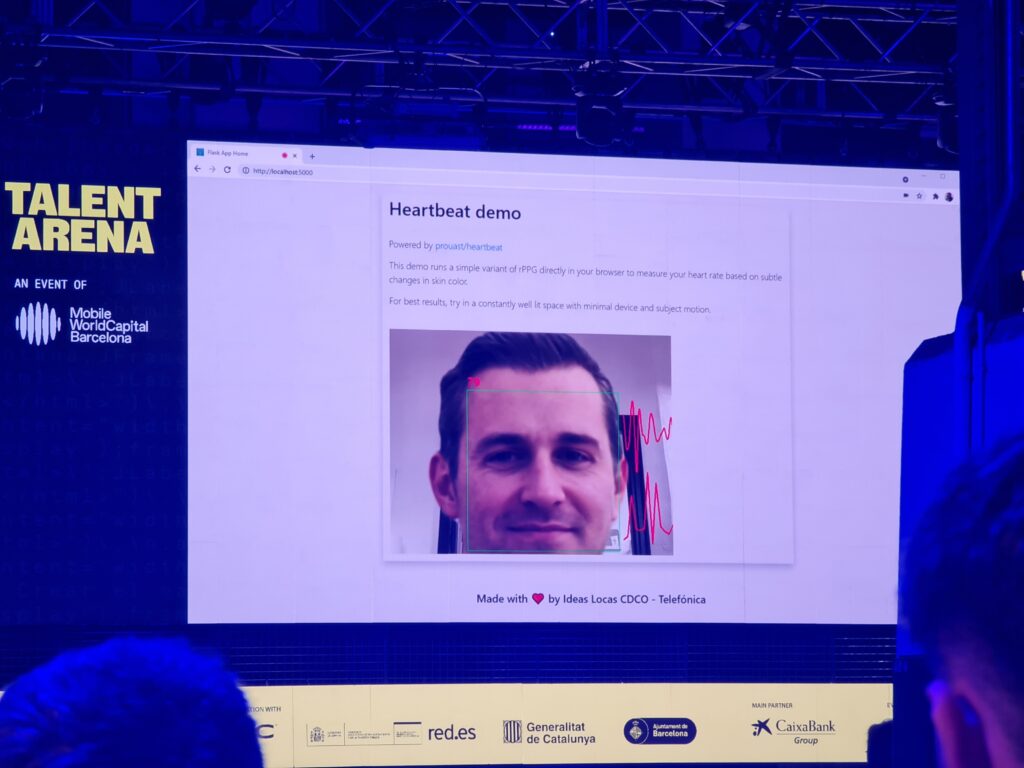
Using AI to detect subtle discrepancies in video content, such as variations in heart rate that deepfakes cannot replicate
MWC Unveils Groundbreaking Mobile and AI Innovations
At the Mobile World Congress (MWC), the future of mobile technology and AI was on full display. The event brought together the biggest names in mobile and tech, offering a glimpse of what’s to come in the world of AI, data infrastructure, and connected devices.
One of the standout moments for Francisco was visiting LG’s booth, where the company unveiled an AI tool designed specifically for specialised tasks. Unlike general AI models like ChatGPT, LG’s tool is lightweight, offline-capable, and tailored for specific functions such as personal assistants. For Francisco, the potential of such tools, particularly if they become open-source, could have a major impact on the content industry. The ability to harness specialised AI models could significantly improve how we tailor content for different regions, languages, and markets.
Another intriguing innovation at MWC was the use of non-conductive fluid immersion to efficiently dissipate heat from servers. While this might seem far removed from our day-to-day work, the technology has the potential to revolutionise how we think about data centre infrastructure. Using oil to efficiently conduct heat, manufacturers can create more powerful, compact servers. For businesses relying on cloud technology, this could mean faster, more powerful services that can handle complex tasks like data processing and content management with ease.
As AI continues to evolve, its role in shaping the future of content delivery, particularly in multilingual markets, is becoming clearer. With the rise of mobile devices that can handle richer, more dynamic content, the pressure is on to ensure that content not only meets the needs of local markets but does so in an efficient way.
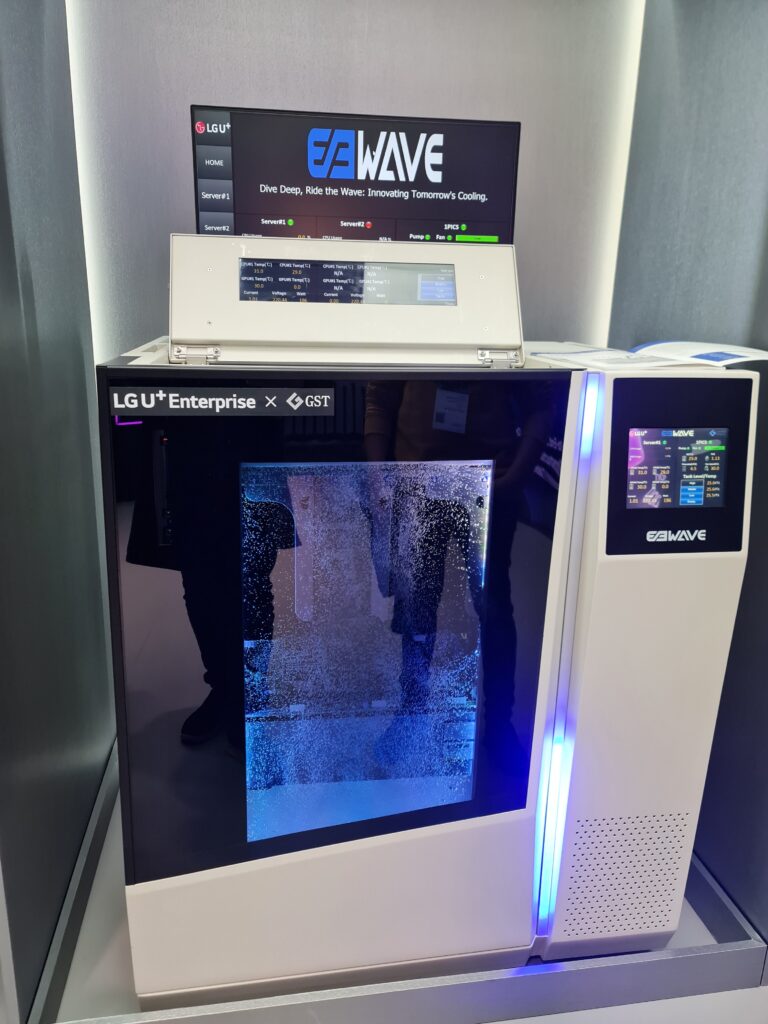
Immersive cooling
Innovation, Leadership, and Risk-Taking
Miguel Siedi, Senior Analyst in Search & Data Performance, stressed that the topic of innovation was a constant thread at both Talent Arena and MWC. A key takeaway from a leadership session at Talent Arena stood out to him: “If your innovation experiments always succeed, you’re not taking enough risks.” He explained that this sentiment resonates deeply with how we approach technology at Locaria. We know that experimentation is crucial for growth, and not every initiative will succeed. But it’s through these experiments that we push boundaries and uncover new opportunities. Whether it’s testing new AI models or exploring new data tools, the willingness to embrace risk is what drives innovation and progress.
In addition to pushing boundaries with technology, the events also showcased how crucial it is to lead with purpose. Innovation can’t happen in a vacuum; it requires strong leadership to guide teams through the complexities of new technologies and ensure that every experiment contributes to a broader strategy. As we continue to integrate AI into our work, the leadership lessons learned at Talent Arena and MWC will guide our efforts to cultivate an environment of creativity, experimentation, and collaboration.
The Road Ahead
The insights from Talent Arena and MWC reaffirm that AI is poised to revolutionise the way businesses operate. For us, the challenge and opportunity lie in leveraging AI to enhance content management, streamline workflows, and drive more effective strategies across multilingual markets.
As AI continues to advance, the key will be to stay agile, continuously testing new technologies, and applying them in ways that deliver tangible results for our clients. The future of content, data, and marketing is undoubtedly intertwined with AI, and those who can adapt quickly will be the ones leading the charge.
Reporting from: Francisco Ibáñez Ballester, Data Integration and Enablement Specialist; Miguel Siedi, Senior Analyst in Search & Data Performance; Pablo García Prado, Junior Data Scientist.