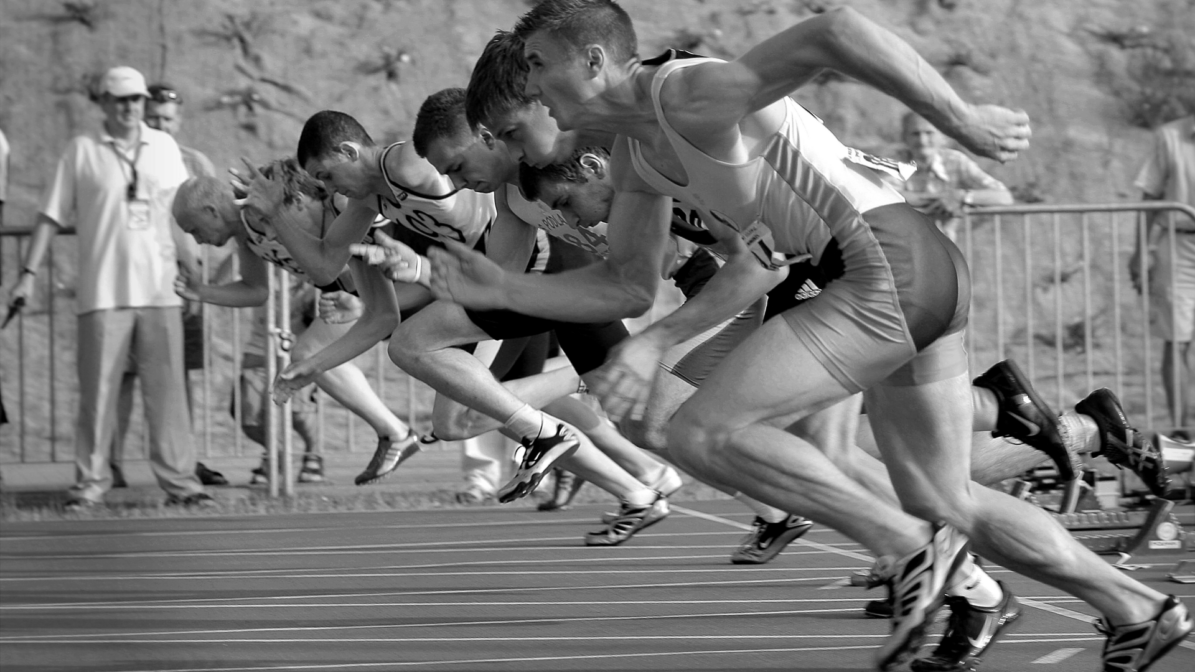

Two days ago, as the Paralympic Games unfolded their vibrant pageantry, a global audience cheered for athletes whose strength, skill, and sheer tenacity will be on full display over the coming days. But beyond the spectacle, we are reminded that sports are not just a universal language—they also come with their own set of delightful dialects, filled with terms that defy neat translation into English. So, let’s take a spin around the world of sports through a handful of such words from Chinese, Italian, French, and Spanish, each reflecting something truly unique about the cultures they originate from.
China’s Poetic Playbook
Consider, for example, the evocative Chinese phrase 梅开二度 (méi kāi èr dù), which translates literally as “The plum tree has its second blossom.” Before you reach for a horticultural manual, rest assured this term is less about botany and more about football. It celebrates the rare moment when a player scores twice in a single game, much like the rare phenomenon of a plum tree blooming twice in one season. It’s an expression of fleeting glory, almost as if Mother Nature herself had decided to bend the rules.
But for those who prefer a more combative spirit, look no further than 破釜沉舟 (pò fǔ chén zhōu), or “break the cauldrons and burn the boats”. For all the maritime history aficionados out there, you may be interested to know this is in fact a phrase born of war, adapted for the sporting arena. It describes teams or athletes who, having decided there’s no turning back after falling behind, throw every last ounce of determination into the game, leaving nothing in reserve.
And then there’s 无冕之王 (wú miǎn zhī wáng), meaning “an uncrowned king.” This phrase captures the essence of those athletes who, though they never quite manage to claim the top prize, nevertheless perform with such excellence and dignity that they remain unforgettable. Think Neymar Jr (football), Charles Barkley (basketball), Dan Marino (American football) or Ronnie O’Sullivan (snooker).
Italy: Where Time Stands Still
Moving westwards to Italy, we find the land of calcio. The word literally means “kick,” a term that seems innocuous until you realise that it stands for an entire national obsession: football.
A charming addition to the Italian lexicon is zona Cesarini. Named after the 1930s footballer Renato Cesarini, who had a knack for scoring in the dying minutes of matches, this phrase now captures those nail-biting final moments where time seems to dilate, and anything is possible. It is that paradoxical juncture where you’re sweating over a stopwatch while longing for time to stand still.
And who could forget the catenaccio, a word that brings to mind images of defensive fortresses on the football pitch? Literally meaning “the lock,” it describes a tactical strategy focused on putting up a barricade to keep opponents at bay. It’s the Italian art of locking down, a kind of “defence-as-offence” that has turned many matches into epic battles of attrition.
France’s Lexical Footwork
Across the Alps, the French bring their own flair to the sporting lexicon with expressions like être coiffé au poteau. Literally, this means “to be passed by hair at the post” and it originates from horse racing, describing a loss by the narrowest of margins. It’s the perfect phrase for the heartbreak of seeing your team’s final shot bounce off the crossbar or the horror of watching your favourite athlete lose by a hair’s breadth—sometimes quite literally.
Or take ça va être sport! Literally translating to “It’s going to be sport,” this phrase is employed whenever a situation promises to be tough, spirited, or, frankly, a mess. Think of it as the linguistic equivalent of bracing for a particularly contentious board meeting or a long-overdue family reunion. It is a phrase that oozes French nonchalance in the face of impending chaos.
Spain’s Sizzling Sprints
Spain, with its fervent love for football, has coined some untranslatable gems of its own. One such term is pichichi, named after Rafael Moreno Aranzadi, a 1920s footballer who was the first to score a goal at the old San Mamés stadium in Bilbao. Now, it refers to the top scorer of the La Liga season.
And, of course, there’s tiki-taka—a term that needs no introduction, yet begs for one anyway. This style of play, characterised by short passing and movement, has become the emblem of Spanish football in the modern era. It’s the linguistic equivalent of a dance, a tango between players, weaving an intricate tapestry that leaves commentators tongue-tied and defenders flat-footed. There’s no neat English translation, perhaps because the English rarely get to see it up close—unless it’s happening against them.
As we celebrate the athletes of the Paralympic Games, let us also celebrate the richness of language in sports, where every culture brings its own distinct flavour to the table. These terms defy easy translation not because they are obscure, but because they capture nuances that lie beyond the reach of mere words. In a world so often divided, it is comforting to remember that the human spirit finds its fullest expression not just on the playing field, but also in the wonderfully untranslatable words that bring those moments to life.
Insights: Rene Hsu, Hélène Winand and Pier Franco Farina
Author: Oliver Barham
Understanding local nuance is the key to building closer ties with your audience. Contact the Locaria team to find out more.