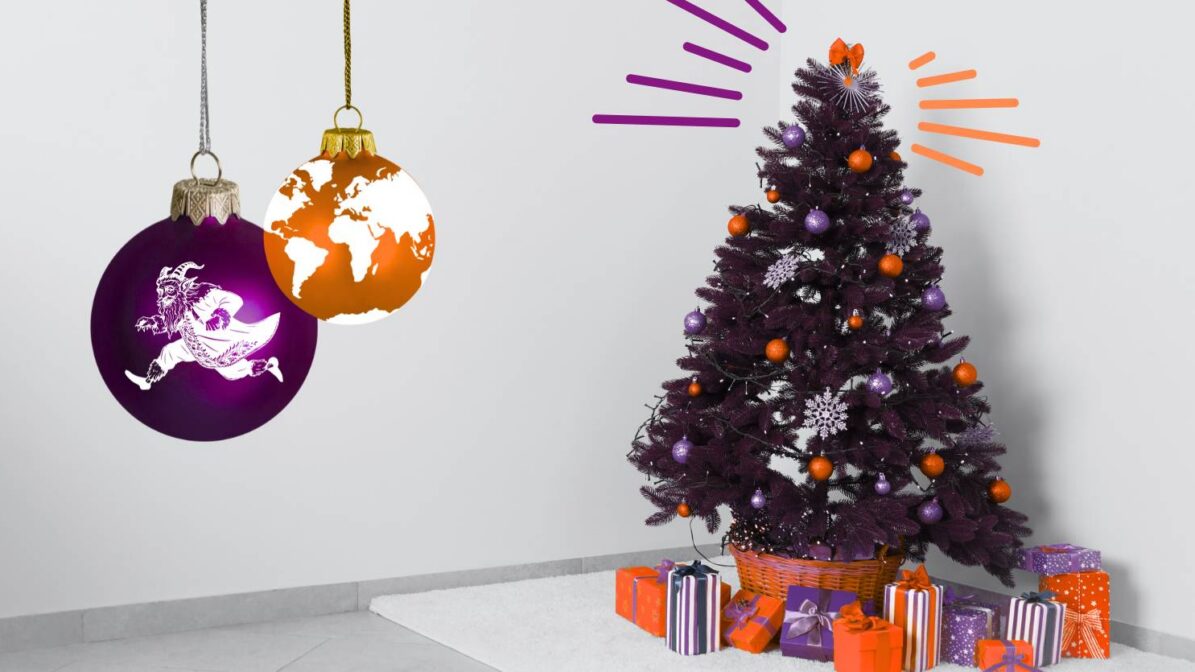
The festive season is here, and we’re rounding off another year of creative collaborations and global partnerships. Since we’re a merry, multicultural team here at Locaria, we wanted to spread some holiday cheer by taking a peek behind the tinsel into the festive traditions around the world.
From roller-skating to church on Christmas morning in Venezuela to friendly witches and mythological monsters roaming the streets – here are some of our favourite festive facts. From 11 holiday traditions, each one tells a unique story from different parts of the world.
Let’s unwrap…
The Netherlands
The festive season begins with the arrival of Sinterklaas in mid-November. A legendary figure based on Saint Nicholas, he arrives from Spain on a steamboat with his assistant, Zwarte Piet. On the evening of 5th December, children leave a shoe by the fireplace, which Sinterklaas fills with treats and small gifts.
Spain
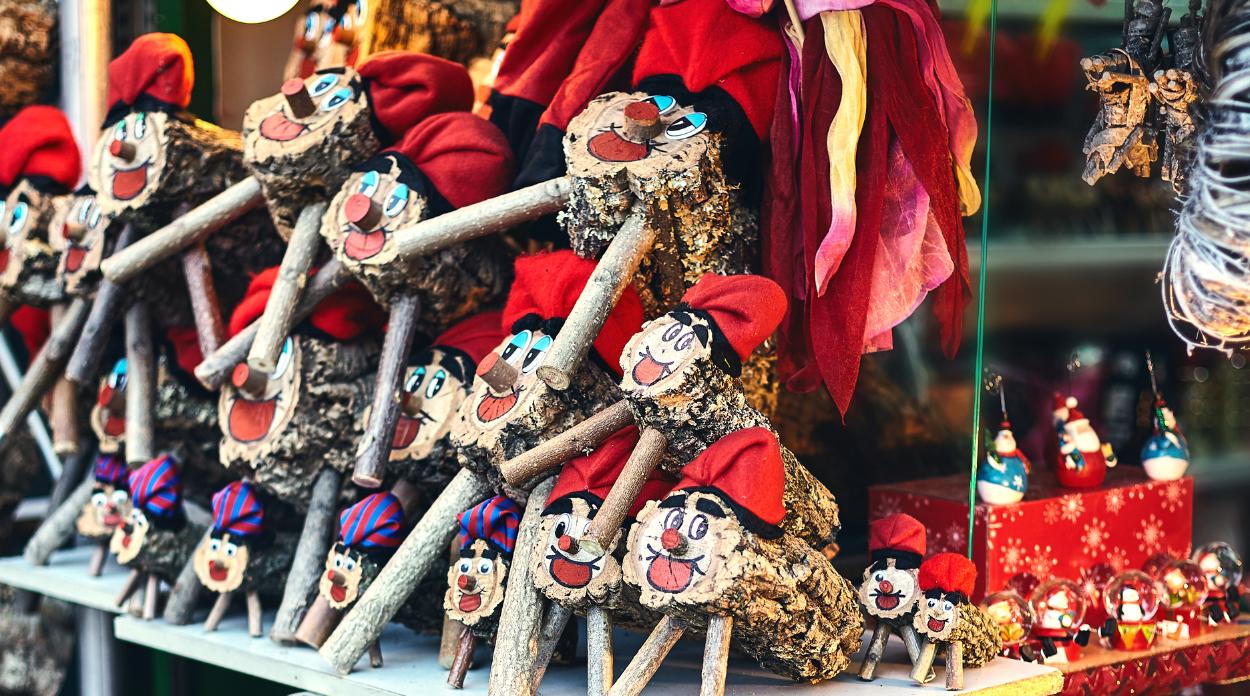
Tió de Nadal, lovingly known as the Catalan ‘poop log’, is a festive character that ‘poops’ small gifts when children sing and beat it with sticks. Starting on 8th December, children feed the log with sweets, candies, nuts, and other food. If they take care of it well, the log should ‘poop’ presents on Christmas Eve or Christmas Day.
Italy
La Befana is an old woman or witch who delivers gifts to good children throughout Italy on 5th January, Epiphany Eve. Similarly to Father Christmas, she comes down the chimney to fill stockings left hanging by children.
Japan
A Buddhist monk named Hoteiosho is the Christmas gift-bringer in Japan. He’s said to have eyes in the back of his head so he can see if children are behaving themselves.
Another fun tradition is that many Japanese people head to KFC on or around Christmas Day. The week leading up to 25th December tends to be the chain’s most profitable week of the year in Japan.
Venezuela
Roller skating to church at Christmas is a unique tradition in Venezuela, particularly in Caracas. Streets are closed to traffic, allowing everyone, young and old alike, to roller skate to church in safety.
Egypt
Coptic Christians — members of the Christian community in Egypt who follow the teachings of the Coptic Orthodox Church — celebrate Christmas on 7th January. A 43-day fast, where no animal products are consumed, leads up to this day.
Germany & Austria
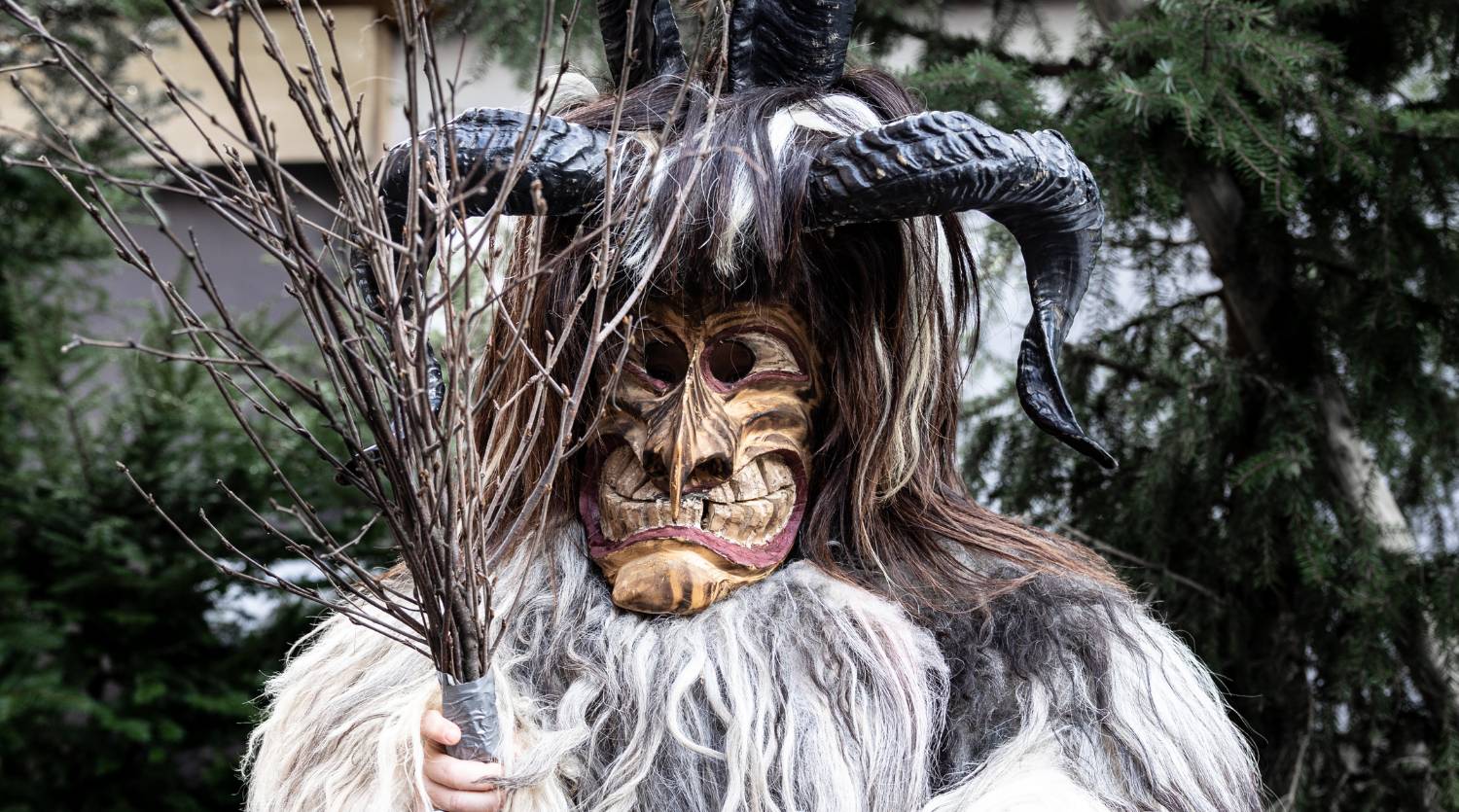
In folklore, Krampus is Father Christmas’s (rather scary) friend, a mythical beast who punishes naughty children. He’s ‘celebrated’ every year on 5th December in a festival called Krampusnacht, often involving a parade in which hundreds dress up as Krampus and chase each other through the streets.
Norway
There’s a tradition of hiding all the brooms in the house on Christmas Eve. It’s believed that this is the time when evil spirits and witches awaken, steal brooms and ride them across the country if they’re not hidden away.
Poland
Wigilia is a Christmas Eve feast of an impressive 12 courses that typically features meat-free dishes. The feasting traditionally starts in the evening once the first star has been sighted.
Mexico
The festive season begins on 16th December with Las Posadas [The Inns], a reenactment of Mary and Joseph’s search for lodging. Christmas Eve is marked by a late-night feast, and gifts are exchanged at midnight.
Ukraine
Spiders and their webs represent good luck and often appear as decorations on Christmas trees. This tradition dates back to a centuries-old folk tale in which a poor woman could not afford to decorate her tree. She woke up on Christmas morning to find a spider had covered it in a glittering web.
We hope you enjoyed these delightfully diverse festive traditions from across the globe!
We invite you to celebrate the unique ways in which communities come together to share the spirit of joy, peace and goodwill during this special time of year.
Author: Hannah Thompson, Digital Content Copywriter